Prevention & Family Strengthening
Supporting Fathers Before a Crisis: Why Family Well-Being Includes Dad
By Michael Cupeles, CCAP
Published
A father’s ability to care for his family deserves practical support, trusted relationships, and attention to his own well-being throughout the parenting journey.

We ask fathers to be present, patient, responsible, and involved. Those expectations matter. They also invite a question that deserves more attention: what helps a father sustain that presence when daily responsibilities become difficult to manage?
A father can be deeply committed to his child while facing an unpredictable work schedule, transportation problems, financial pressure, or uncertainty about where to turn. His strengths and his need for support can exist at the same time.
My work with fathers, families, and organizations leads me to consider both. I want to understand what a father brings to his family and what would help him keep contributing. That conversation belongs in schools, healthcare settings, public agencies, early childhood programs, and community organizations.
Recognize the person doing the parenting
A father brings more than a role on a form. He brings relationships, knowledge of his child, cultural and community connections, and his own aspirations. Start by asking about those strengths and what he wants for his family.
Then make room for his circumstances. A father who lives apart from his child may have different support needs from one managing daily care at home. An adoptive father, stepfather, or grandfather raising a child may face another set of questions. Ask rather than assuming that one pathway fits everyone.
The 2024 Surgeon General’s advisory, Parents Under Pressure, identifies financial strain, time demands, and isolation among the pressures affecting parents and caregivers. Its recommendations extend to employers, community organizations, schools, and health and social service systems. This is a shared responsibility with room for organizations to contribute.
Include fathers’ well-being in the family conversation
Supporting a father means recognizing his well-being as valuable in its own right, alongside his relationship with his child.
In a peer-reviewed study of caregiver and child health, Wolicki and colleagues (2021) found associations between poor mental health among male caregivers and less favorable child health indicators. The authors also identified gaps in attention to fathers and male caregivers. Their survey analysis does not establish cause and effect or predict an individual family’s experience.
For me, this strengthens the case for including fathers when organizations consider family well-being. It also calls for care in how we talk about support. Experiencing stress does not establish a diagnosis. A father can ask for help without an organization deciding what his experience means before listening.
Pair encouragement with practical help
A conversation about coping should include a conversation about what is creating pressure.
If transportation is the obstacle, explore available options. If a work schedule makes an appointment difficult, discuss a feasible time or another way to connect. If a father wants employment assistance, identify a relevant partner and clarify the next step. Be specific about eligibility, availability, and what the organization can provide.
The Center for the Study of Social Policy’s Strengthening Families framework includes parental resilience, social connections, and concrete support in times of need among five protective factors. I see a practical application for fatherhood work: examine both the relationships around a father and his access to useful assistance.
Organizations cannot resolve every pressure. They can review whether their own procedures add difficulty, whether referral information is current, and whether fathers know whom to contact when a connection does not work.
Make asking for support an ordinary option
An organization can explain available support during routine contact, while a father has time to consider his options. He should understand whether a service is voluntary, what participation involves, and how information will be handled.
I would begin with open questions: What is going well? What is taking the most energy? Is there something you would like help figuring out? Let the father identify the priority and decide what he wants to share.
When a father wants mental-health support, help him connect with a qualified professional within the organization’s role. Explain confidentiality and its limits accurately. Respect consent, family safety, and applicable responsibilities when communicating with other caregivers or providers.
Leadership also needs to make this workable for staff. That includes time for follow-up, clear referral procedures, and guidance when a request exceeds a staff member’s responsibilities.
Build connection around real life
Offer fathers ways to connect that reflect their interests: a conversation with peers, a shared activity with their children, or an individual meeting. Ask which options feel useful and feasible.
A group should allow room for contribution as well as questions. Fathers may bring knowledge about parenting, navigating services, or sustaining family routines that helps shape the discussion. Nobody should have to disclose a painful experience to participate.
Fathers should also help review how support is offered. Ask whether the invitation was clear, whether the setting felt respectful, and whether they could use what was provided. Their feedback can identify a practical adjustment that staff and leadership might otherwise miss.
Follow the connection through
Consider a hypothetical father who wants employment assistance but cannot attend a partner’s daytime intake because of his current shifts.
With his permission, a staff member could check whether the partner offers another intake option, help him identify the information required, and agree on a time to follow up. If no workable option exists, the organization should say so and explore another possibility with him.
That example describes a proposed process, not a completed engagement or a promise of employment. Its value is a clearer next step and a person who knows what remains unresolved.
I would bring four questions to an organizational discussion:
- Can fathers find and request support before circumstances become urgent?
- Do we ask about their strengths and priorities before proposing a plan?
- Do our referrals include a feasible next step and agreed follow-up?
- What have fathers told us needs to change, and who will act on it?
These are starting points for shared review. Organizations can examine access and follow-through without treating a referral count as proof of improved family outcomes.
Make support part of the relationship
For me, prevention includes the ordinary work of helping families find support while there is still room to plan. That begins with listening and continues through the practical choices an organization makes.
When we ask fathers to show up for their children, we should examine how we show up for fathers. We can begin together with one barrier, one workable change, and an agreed way to learn whether that change helps.
Let’s discuss how your organization can strengthen support for fathers and families.
Sources & Further Reading
- Office of the Surgeon General. (2024). Parents under pressure: The U.S. Surgeon General’s advisory on the mental health & well-being of parents. U.S. Department of Health and Human Services.
- Wolicki, S. B., Bitsko, R. H., Cree, R. A., Danielson, M. L., Ko, J. Y., Warner, L., & Robinson, L. R. (2021). Mental health of parents and primary caregivers by sex and associated child health indicators. Adversity and Resilience Science, 2, 125–139. DOI: 10.1007/s42844-021-00037-7.
- Center for the Study of Social Policy. (n.d.). Strengthening Families.
Sources and image licenses checked October 14, 2026. Organizational suggestions reflect Michael’s professional perspective; the example is hypothetical.
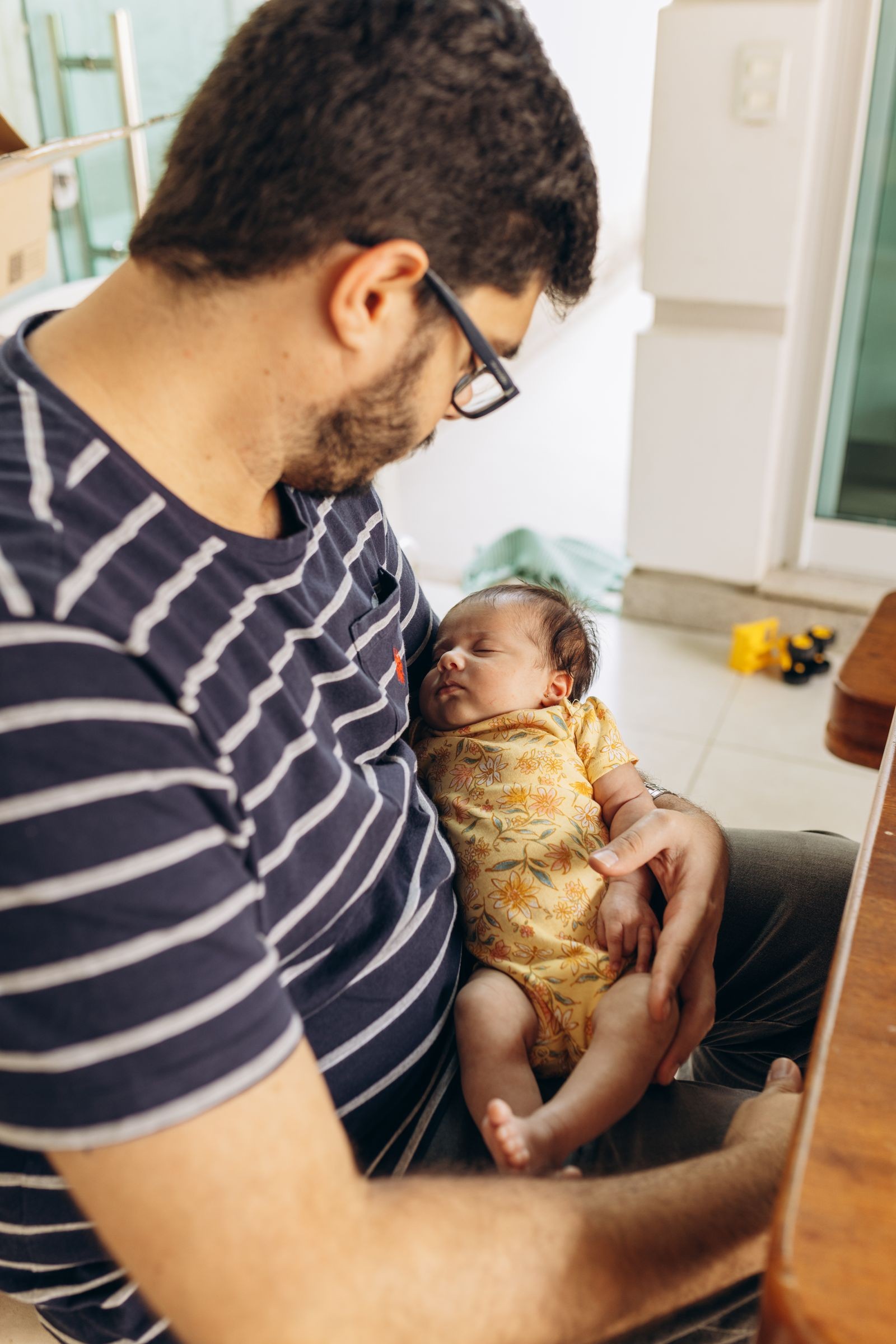
The photographs illustrate caregiving. They do not depict Michael’s engagements or imply anything about the subjects’ health, finances, service use, or endorsement.